Thursday, January 21, 2016

Cancer Moonshot 2020 is our best hope yet to conquer the Emperor of all Maladies

Dr. Soon-Shiong in his LA office where the walls are literally filled with his grandiose vision for the future of medicine.
In the most significant proposal of President Obama's final State of the Union he announced Patrick Soon-Shiong has teamed up Vice President Joe Biden and the largest pharmaceutical companies in the world to launch Cancer Moonshot 2020 in a unified effort to cure cancer once and for all.  Vice President Biden published his vision for the Moonshot project today on Medium.


"There are unique times in history when events and advancements in technology converge to elicit a quantum leap in medical care. This is not only a unique time, but also a unique inflection point in the history of cancer,” said Dr. Patrick Soon-Shiong, M.D., Founder and Chief Executive Officer of NantWorks and the Chan Soon-Shiong Institute of Molecular Medicine. “The era of immunotherapy has taken the oncology world by storm. For the first time in 40 years there is a glimmer that we may be able to win this war against cancer. Large pharma and biotech companies are developing dozens of agents to activate the immune system. The problem is that while these drugs are being developed individually in silos by each entity, they need to act together when it comes to activating the immune system. If we follow the current path of drug development, it may take 40 or 50 years before we have worked out the right cocktail combination and countless lives will be lost as a result of this inefficiency.”
  • Nation’s first insurance coverage of next generation whole genome sequencing and proteomic diagnostic platform in cancer patients‎. 
  • Next generation sequencing ‎and precision medicine evolving from research to the clinical trial and cancer care setting
  • Coalition to design, initiate and complete randomized clinical trials at all stages of cancer in up to 20 tumor types in as many as 20,000 patients in multiple phase 1 to 3 trials by year 2020‎
  • Beneficiaries and patients will undergo next-generation molecular sequencing and gain access to over 60 novel and approved molecules to be tested as immunotherapy combinations in 20,000 cancer patients with cancer across all tumor types: The QUILT Program
The QUILT (QUantitative Integrative Lifelong Trial) program is designed to harness and orchestrate all the elements of the immune system (including dendritic cell, T cell and NK cell therapies) by testing novel combinations of vaccines, cell-based immunotherapy, metronomic chemotherapy, low dose radiotherapy and immunomodulators -- including check point inhibitors-- in patients who have undergone next generation whole genome, transcriptome and quantitative proteomic analysis, with the goal of achieving durable, long-lasting remission for patients with cancer.
The multiple Phase 1 and 2 protocol designs will be a collaboration between academia, pharma, and clinical scientific experts in immunotherapy in accordance with the recent published U.S. Food and Drug Administration guidance of “Co-development of Two or More New Investigational Drugs for Use in Combination.” Multiple companies are currently exploring first-in-human clinical trials as part of agreements between government agencies, including Immunology Branches of NCI, academia and community oncologists. Multiple randomized Phase 2 trials testing genomically and proteomically informed novel combinations of immunotherapy agents, will pave the way to identifying cancer therapy combinations with the lowest toxicity and the highest quality of life.
Both academic cancer centers and community oncologists will participate in the QUILT Program to enroll 20,000 patients by 2020.  The QUILT Program will be stratified across multiple Phase 1 and Phase 2 trials, addressing up to 20 tumor types including breast, lung, prostate, ovarian, brain, head and neck, multiple myeloma, sarcoma, pancreatic cancer, among others. Pharmaceutical and biotechnology partners have made an unprecedented commitment to make more than 60 novel immunotherapy, targeted therapy and chemotherapeutic agents available to be combined across multiple tumor types.

Below are videos of the press release at the JP Morgan Conference in San Francisco and a description of the project.


Saturday, January 16, 2016

Digital Health News and Notes


Bill Gates, Jeff Bezos and Illumina are among the investors in the $150mm seed round of a new cancer diagnostics startup subtly named GRAIL

Once promising telemedicine startup HealthSpot (an Ohio-based startup that I first covered in 2012 while I was a full-time blogger at iMedicalApps.com) has squandered almost $30mm in venture capital and partnerships with Cleveland Clinic and RiteAid announcing it will enter the Digital Health Deadpool. To add insult to injury, HealthSpot's leading competitor Chicago-based Higi landed $40mm in new funding this week.

On the investor-side of the table former-Senator Bill Frist has unveiled a new private equity fund based in Chicago, Orbimed announces a new $950mm fund and Partners HealthCare expands it’s life sciences innovation fund to $100mm. The American Medical Association has invested $15mm in a new for-profit startup incubator based in San Francisco called Healthy2047. Not to be outdone, the Governor of Massachusetts has launched an almost cliche effort to make his state the "digital health hub of the world".

Bill Frist
On the personalized medicine front Flatiron Health closed a massive $175mm funding round led by Roche and NantHealth has acquired NaviNet and founder Patrick Soon-Shiong makes it clear he now has all of the pieces in place to move swiftly toward IPO.

According to data from both Rock Health and Startup Health venture funding was down during 2015 in digital health for the first time since data on investments in the sector have been tracked.

Friday, January 15, 2016

Epic Systems is the startup Dragon that eats Unicorns for breakfast

It occurred to me the other day that I have never seen Verona, WI-based Epic Systems mentioned on any of the lists of Unicorns (CruncbaseCB InsightsFortune). This is puzzling considering Epic has dominated the electronic medical record market for more than a decade, pulling in well over $1B in annual revenue and growing at breakneck speed creating a quarter of all new jobs in Dane County over the last decade.

Epic is particularly popular amongst the prestigious academic medical centers like Mayo ClinicVanderbilt University and Partners Healthcare, as well as with mega-systems like Kaiser Permanente and Providence Health. They may have lost the coveted DoD contract to archrival Cerner, but they won nearly every other high-profile contract up for bid.
Anybody who has visited Epic’s corporate headquarters recently can speak to the enormity of what Judy Faulkner and her right hand man Carl Dvorak have built just outside of Madison, WI. When roaming the campus it’s easy to forget you are in the middle of Midwestern farm country because the company has built a culture teeming with a youthful free-spirited ambition that feels more like Silicon Valley. The selected images below show just a small taste of the fantastical environment that is the Epic campus.


If the only prerequisite to joining the Unicorn club were a valuation of $1B+ Epic qualified back when the number of members could still be counted on two hands. But clearly that is not enough otherwise Epic would be counted. It’s hard for me to imagine they have simply been overlooked by the analysts.
I wonder if the unspoken requirement to join the Unicorn club is bending over to get screwed by the venture capitalists? After all, the term was originally coined by venture capitalist Aileen Lee of Cowboy Ventures, and the manipulative genius of the term is that somehow VC have been able to convince the new generation of “tech bros” in Silicon Valley that achieving Unicorn status is the new IPO.
Judy Faulkner has never taken a penny from investors. Instead she has built a product capable of supporting itself with revenue from day one, and personally spearheading all deals.
Is there another example of a software company growing to the scale Epic has achieved without taking any outside investment? I can’t think of one.
Most entrepreneurs and VC would tell you what Epic has achieved is impossible and the only way to achieve scale and sustain growth is to take venture capital and spend it aggressively.

No venture capital and no sales team!! Epic is truly such a unique company it would be demeaning to call it a Unicorn. I think it belongs in a category by itself — the first and only startup Dragon.


Friday, November 20, 2015

Survey Shows Consumers Unlikely to Share Data with Tech Companies


The American public does not trust technology companies with personal health data, according to a survey from Rock Health, a venture capital firm focused on digital health. The survey, of 4,017 people, found that only 8 percent said they would share health data like medical records and lab results with “a technology company.” There was a huge gap between that figure and the number who said they would hand their health history over to a research institution (36 percent) or to their own doctor (86 percent). When asked whom they would share their DNA data with, the responses were similar.

from Pocket
via IFTTT

Friday, October 23, 2015

Female Unicorn Poop Gets Mixed Reviews From FDA


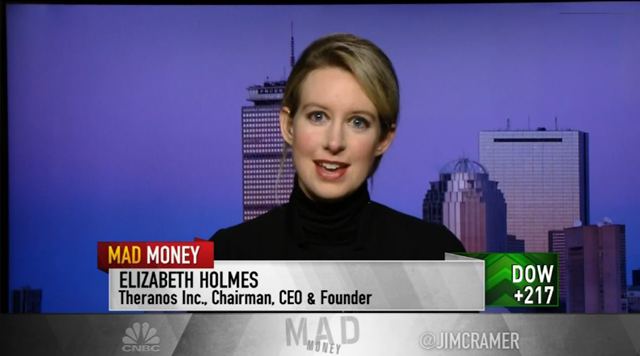
Elizabeth Holmes (photo above) and her startup Theranos are getting heavy heat from just about everybody, most crucially the FDA, which sprang a surprise inspection on the company. It is certainly worth checking out a great collection of articles on the Thernos controversy curated at ReDef.

Apparently there has been some misuse of “nanotainers” — possibly the douchiest thing ever invented by a woman — which are only supposed to be used for a Herpes test but seem to be used much more often. I was recently having lunch with two pathology industry executives and they were brutal in their assessment of the startup and its “joke” of a business model and while I couldn’t follow their gargon-laden conversation I was intrigued so I started doing some research.
The best commentary I have read so far on Theranos and the controversy surrounding its testing methods and materials is a piece Dan Munro of Forbes published on Medium emphatically titled Why I Believe My Theranos Blood Test Was Inaccurate and Useless. First of all, I found it weird that Munro would publish such a piece on Medium when it seems like it would get much greater attention under his Forbes by-line, but considering the inflammatory nature of the title perhaps it was prudent for Munro’s Forbes editor to hold off judgement and leave WSJ alone behind the 8-ball as Theranos fires back with full cannons blazing. But I digress…
In the piece Munro presents a brief and compelling vignette about his own personal user-experience at a Theranos clinic in Phoenix which he thoroughly reviewed in a post published on Forbes while simultaneously dissecting publicly available information from both Theranos and the FDA. Upon reflection Munro seems to be convinced he was hoodwinked, and while he appears to be basing his opinion on mostly speculation based on limited information, the questions he posed must be answered by the company or they will suffer irreparable harm to their reputation IMO.
Elizabeth Holmes has responded to her most vocal critics at the WSJ by attempting to shame the paper as “a tabloid”. It will be very difficult for the company to be so dismissive of Munro considering he is one of the best health care journalists and commentators who has actually written favorably of the company to date, concluding his piece in Forbes with the following assessment:
All in all ‒ the Theranos experience is well thought out as a retail experience and about as frictionless as possible…
I will hold off final judgement until I have a better understanding of the situation, but at first whiff it sure does smell to me like a huge load of female unicorn poop.
Meanwhile, 23andMe has been granted permission from the FDA to resume marketing limited version of its clinical risk reports suspended two years ago at the agencies request. The company was little phased by the temporary injunction, using it as an opportunity to shore up its scientific team and shift its business model to unlock the unknown value of its biobank and 1 million+ user-base.
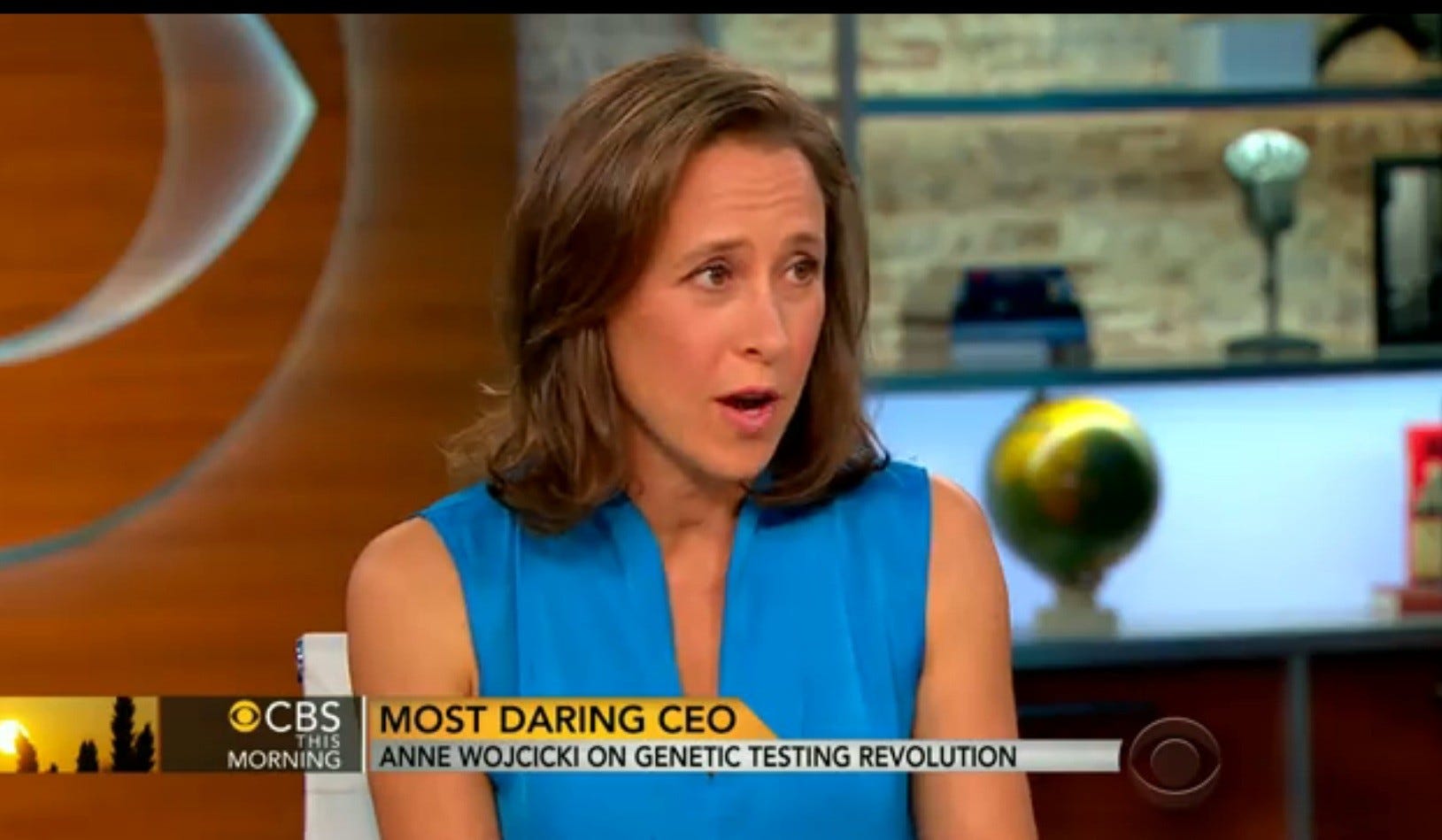
The moniker chosen by CBS Morning News to place under 23andMe CEO Anne Wojocicki of “Most Daring CEO” (photo below) is apt as her pivot to focusing on drug development is logical, bold and not unthinkable to execute to some degree. However, they lack the phenotypic data to complement the very limited genotypic data they have accumulated, specifically the diagnoses and outcomes captured in electronic medical records. Without this information it is very difficult to determine what diseases one should be targeting based on purely genomic data.
It’s hard to imagine how one could possibly make investments in R&D while essentially flying blind and using data from subjects that is indecipherable without some deeper, complementary knowledge on what actually happened to each each individual longitudinally. I suspect the company’s strategy for filling the holes in the information will focus on attempting to replicate the EMR data using Q&A features on their website or via email surveys or something along these lines but does the use of unvalidated questionnaires designed by under-qualified 23andMe staff meet the standard of scientifically actionable phenotypic data?!? I think not…
In sorta related news, it was both saddening and slightly terrifying to learn from the new HBO documentary San Francisco 2.0 that the unicorn poop left in the wake of the Silicon Valley “tech bros” is systematically destroying the culture of San Francisco with its douchey stench. It is mind-boggling to think that the sudden appearance of unicorn poop on the sidewalk was all it took to cause property values and rent in the Bay area to get totally out of control. The film shows the tragic dichotomy of a city scrambling to cash in on the boom, renting 1400 sq/ft one bedroom houses for $10,000/month to 25 year-old Google and Facebook employees without the slightest consideration for the impact on longtime tenants who are basically left homeless, really city-less in a sense and with very little hope that the city they have loved still has a place for them.


Thursday, September 17, 2015

The DodoNA Project is collecting sushi-grade data and genomics from thousands of patients to unlock the mysteries of brain disease


The DodoNA Project  

“DodoNA” is a metaphor. The oldest oracle of ancient Greece was at Dodona. Priestesses would interpret the rustling of leaves of an oak tree to predict the future and to advise the correct actions to be taken. Just as at DodoNA, we can interpret subtle variations in DNA, the “tree of life”, to predict outcomes and to advise our patients the correct actions to be taken. Through DNA predictions, we will improve neurological health.  Specifically, we are developing medical informatics tools to capture standardized data via routine office visits that measure the progression and outcomes of patients with 11 well-defined neurological disorders (one per Neurology program; Parkinson’s, migraine, MS, restless legs syndrome, mild traumatic brain injury, stroke, epilepsy, Alzheimer’s, ALS, brain tumors, to be named). DodoNA is a clinical practice initiative (note writing and workflow efficiencies) and a quality initiative (Best Practices). It is also a research initiative. Namely, we will invite up to 1,000 subjects for each of the 11 disorders (11,000 subjects total) to provide via informed consent a blood sample for DNA extraction and storage, and permission to associate information in their blood with information in their medical records (for the purposes of developing molecular prognostics and therapeutics).
Principal Investigator: Demetrius M. Maraganore, MD
from Pocket http://ift.tt/1guiTXZ
via IFTTT

via Tumblr http://ift.tt/1NG0MwS

Pocket

Featured Post

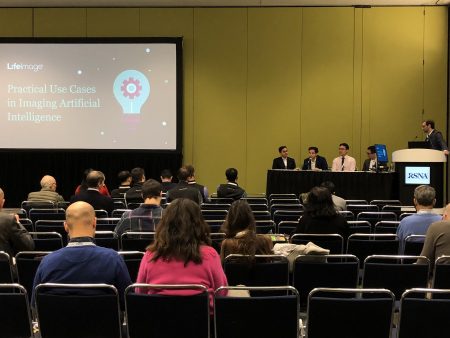
RSNA18: Radiologists embrace their fate, choose to engage/encourage AI vendors rather than fear/flee them

Key Takeaways Fear of AI has given way to exuberant optimism/anticipation/impatience. Many vendors are trying to pivot their legacy p...